Energy stack
Every megawatt of compute brings its own clean power.
Sites are paired with renewable generation, storage and clean backup, so capacity can grow without waiting years for congested grids.
~1.1
Power usage effectiveness design target, in line with leading hyperscale sites
100%
Of electricity to be matched with renewable supply, direct or contracted
60%+
Of data centre operators now exploring on-site generation (industry survey)
5 to 10 yrs
Typical wait for grid upgrades in constrained regions, too slow for AI demand
How power moves through a site.
Generation and storage sit behind the meter. The grid becomes a partner the site can support, not a bottleneck it waits on.
Generation and storage
Modular compute pods
What the site gives back
Siting
Location is the first efficiency decision.
Stranded renewable power becomes productive compute.
Middle East
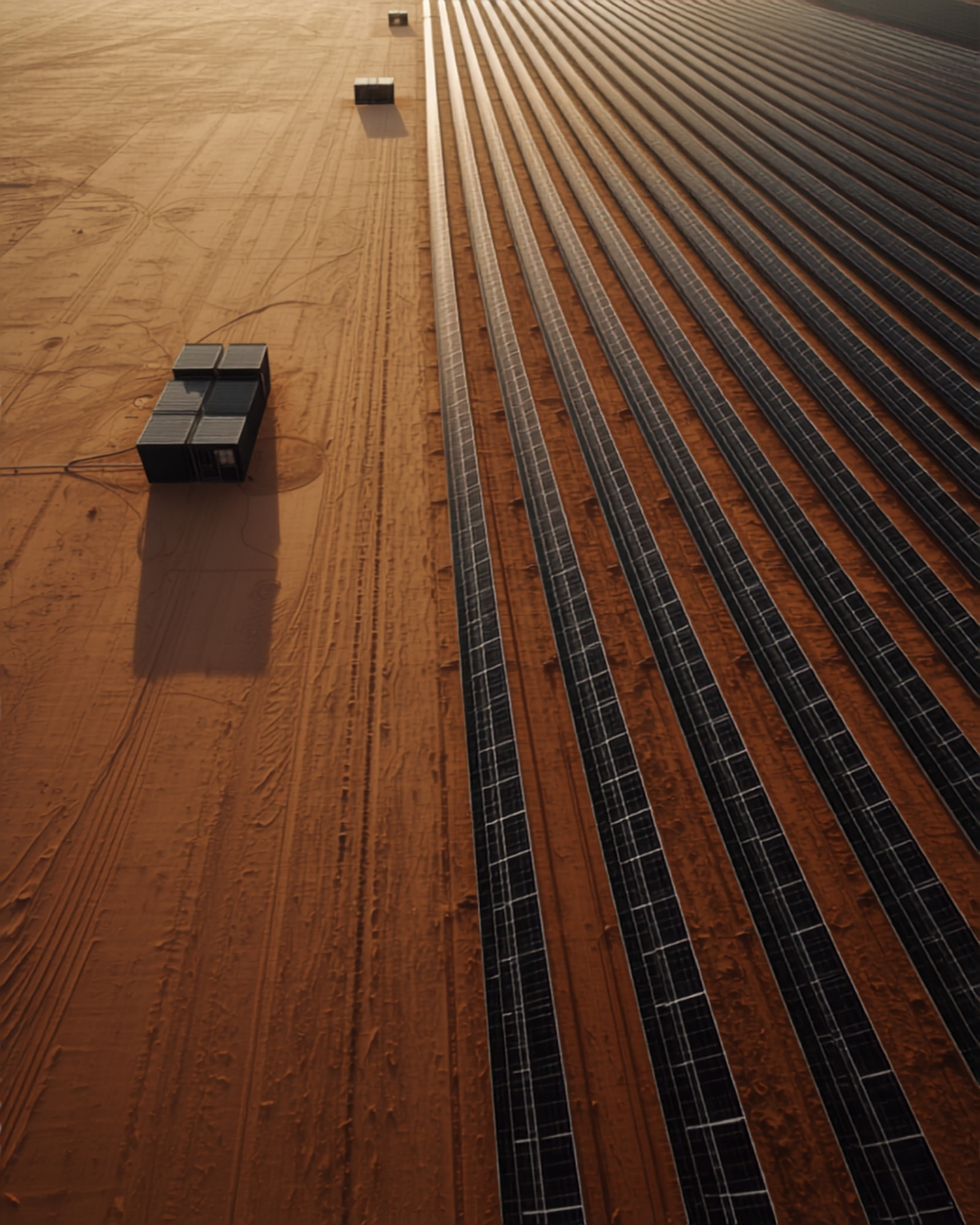
The pilot is planned for the MENA region, where high solar irradiance and national renewable programmes support co-located solar or long-term PPAs.
Nordics and Northern Europe
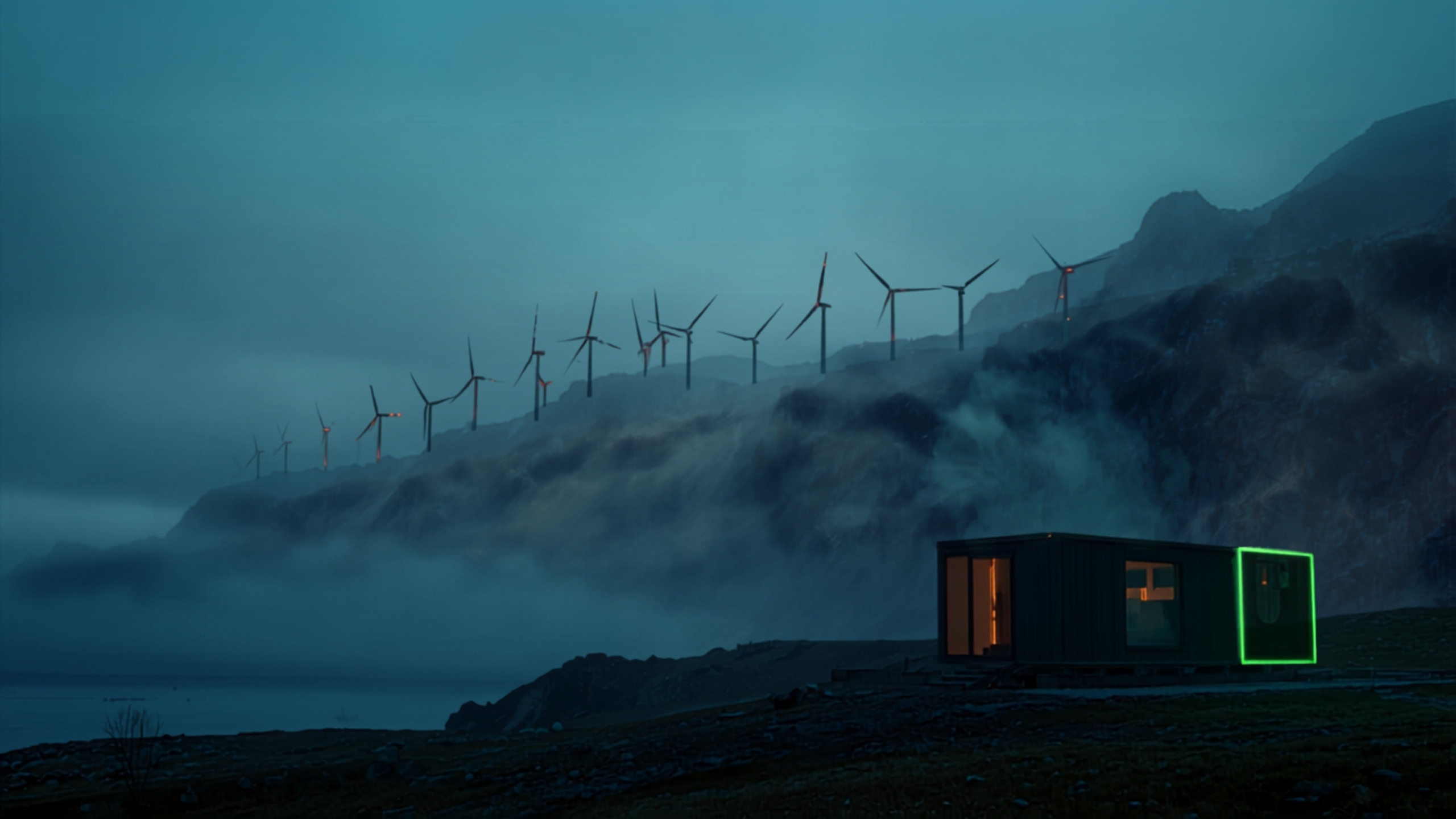
Hydro and wind grids, cool air for free cooling, and tax incentives for sites that return waste heat to district heating.
North America
Wind and solar-rich regions such as Texas for large hubs, where cheap renewables are abundant.
The cleanest kilowatt is the one you never use.
Liquid and immersion cooling
Coolant pumped directly to high-density GPU racks, or servers immersed in dielectric fluid. Far more efficient than air.
Free-air cooling
In cooler climates, outside air replaces power-hungry chillers whenever conditions allow.
Waste heat reuse
Server heat captured and piped to nearby homes, offices or greenhouses, as Nordic operators already do.
AI power management
Idle servers power-capped, workloads consolidated, batch jobs moved to hours of surplus solar.
Hydrogen instead of diesel
Proton-exchange membrane fuel cells combine hydrogen and oxygen and emit only water. Multi-megawatt systems have already kept hyperscale data centres online in trials. SBX GRID plans pilots where diesel backup is being phased out.
Planned pilots
Small modular reactors, kept open
Not an immediate plan. If SMRs become commercially viable and publicly accepted, a large hub could host one for constant carbon-free baseload. The design leaves room for that option.
Long-term option
Green claims you can verify on-chain.
A public ESG dashboard is planned to show each site's energy mix, PUE, water use and emissions. Renewable energy certificates and carbon credits can be tokenised so every clean megawatt-hour is provable, and surplus credits can become a revenue stream for the network.
Certification and reporting targets
- LEED Gold or Platinum
- ISO 50001 energy management
- Climate Neutral Data Centre Pact
- EU Code of Conduct for Data Centres
- GRI and SASB aligned reporting